
 | Prof. Nikos C. SagiasUniversity of Peloponnese, Greece Bio: Nikolaos Sagias is a Professor at the department of Informatics and Telecommunications (DIT) of the University of Peloponnese (UoP), Greece, where he serves as the director of the Digital Communications and Systems Laboratory and a member of the UoP Board of Directors. He holds a PhD in Telecommunications Engineering, an MSc in Electronics and Radioelectrology, and a BSc in Physics. He joined UoP in 2008 and also served twice as the Chair of DIT. Prior to his academic appointment, he worked as a researcher at the National Observatory of Athens and the National Centre for Scientific Research-Demokritos. His research focuses on wireless communications, 5G/6G systems, millimeter-wave communications, reconfigurable intelligent surfaces, software-defined radio, satellite communications, MIMO systems, pinching antennas, and optical wireless communications. He has authored more than 130 journal and conference papers and has received over 4500 Google Scholar citations. His work has appeared in leading IEEE journals, and he has received best paper awards at IEEE WCNC14 and ISCCSP08. He is recognized among the top 2% of researchers worldwide and has served as Associate Editor of IEEE Transactions on Wireless Communications. Speech Title: Programmable Wireless Environments: From Controllable Metasurfaces to Controllable Waveguides Abstract: Future wireless networks are expected to support increasingly demanding services in terms of coverage, reliability, localization, energy efficiency, and adaptability, making it necessary to move beyond conventional designs where the propagation environment is treated as a passive and uncontrollable medium. Programmable wireless environments (PWEs) respond to this need by envisioning the wireless environment itself as an active part of the network, capable of being configured according to communication objectives. Within this vision, reconfigurable intelligent surfaces (RISs) have emerged as a foundational technology, since they enable surrounding surfaces to control the electromagnetic response of the environment and shape wireless propagation through functions such as reflection, absorption, diffusion, and coverage steering. Alongside RISs, pinching antenna systems introduce a complementary reconfigurable capability by using dielectric waveguides and dynamically activated radiating points to adapt where radiation occurs. Therefore, this talk presents the evolution from RIS architectures to pinching antenna systems as a coherent path toward PWEs, where different reconfigurable technologies cooperate to make wireless propagation a programmable network resource. |
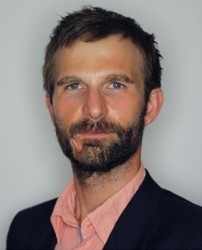 | Dr. Philipp SvobodaTechnische Universität Wien, Austria Bio: Philipp Svoboda is an Researcher at TU Wien, where he serves as the Head of the Christian Doppler Laboratory for Digital Twin assisted Artificial Intelligence for Sustainable Radio Access Networks (CDLab AIRAN). His research aims to contribute to the development of resilient, intelligent, and energy-efficient wireless systems through both fundamental and applied investigations. His current research investigates the integration of Digital Twin (DT) models and Artificial Intelligence (AI) to optimize the design and operation of Radio Access Networks (RANs). This work addresses key challenges identified for 6G and subsequent systems, particularly the enhancement of data-driven network optimization and strategies for improving energy efficiency and environmental sustainability. This focus is informed by his extensive experience analyzing the performance aspects of 4G and 5G cellular technologies. A foundational component of this research involved developing robust frameworks for evaluating network quality using crowdsourcing methodologies, aimed at supporting more reliable connectivity. Dedicated to the principle of impactful, academic-industrial collaboration, Philipp leads a team of researchers within the CDLab AIRAN. The laboratory actively explores partnerships focused on advancing the state-of-the-art in intelligent and sustainable connectivity and welcomes professional inquiries regarding collaborative research opportunities. Speech Title: Paving a Road for AI in 6G: Digital Twins and the Measurement Bottleneck Abstract: The transition towards 6G networks necessitates a fundamental paradigm shift from reactive network management towards proactive and autonomous optimization strategies. Central to this evolution is the "Digital Twin" (DT), acting as a high-fidelity virtual representation of the physical radio environment. Utilizing extensive empirical measurements from real-world datasets in Vienna, the construction of differentiable network twins allows for the direct and scalable optimization of critical network parameters—such as transmit power and load-balancing—via gradient-based Artificial Intelligence. The enhancement of prediction reliability for signal parameters (RSRP), particularly within complex urban environments and railway corridors, is achieved through the integration of uncertainty-aware Bayesian learning. In the context of 6G, these DTs evolve beyond simple monitoring tools to become the core engine for Integrated Sensing and Communication (ISAC), facilitating high-precision localization and context-aware connectivity. By addressing the "sim-to-real" gap as a structured AI challenge, this framework establishes a practical roadmap for sustainable, zero-touch network management. These findings provide a technical basis for future collaboration among researchers focused on digital-twin-based network evolution and intelligent infrastructure. |
 | Assoc. Prof. Xingqi ZhangUniversity of Alberta, Canada Bio: Dr. Xingqi Zhang received the B.Sc. degree from the Harbin Institute of Technology, China, and the M.A.Sc. and Ph.D. degrees from the University of Toronto, Canada. He is currently an Associate Professor in the Department of Electrical and Computer Engineering, University of Alberta, Canada. He is also affiliated with the School of Electrical and Electronic Engineering, University College Dublin, Ireland, and has been a Visiting Professor at the University of Toronto and the Queen Mary University of London. His research is in the interdisciplinary areas of applied electromagnetics and wireless communications, with particular emphasis on computational electromagnetics, antennas and RF systems, radio wave propagation and wireless channel modeling, and AI-enabled electromagnetic and wireless system design. His research has applications in 5G/6G/THz wireless communications, intelligent transportation (air, ground, underground), industrial Internet of Things, as well as biomedical sensing and healthcare technologies. He has served as a Distinguished Lecturer of the IEEE Vehicular Technology Society (VTS), and an Associate Editor for the IEEE Antennas and Wireless Propagation Letters (AWPL), the IET Microwaves, Antennas & Propagation (MAP), and the IEEE Journal on Multiscale and Multiphysics Computational Techniques (JMMCT). In addition, he has been a Technical Program Committee Member and Session Chair for several flagship international conferences (e.g., IEEE AP-S/URSI, IEEE IWS, IEEE NEMO, IEEE VTC). His contributions have been recognized through numerous honors and awards, including the IEEE Sensors Council Technical Achievement Award in Sensor Systems or Networks, the Petro-Canada Emerging Innovator Award, the Applied Computational Electromagnetics Society (ACES) Early Career Award, the Royal Irish Academy (RIA) Charlemont Award, the Irish Research Council (IRC) Research Ally Prize, the IEEE ICCT Outstanding Young Scholar Award, five Young Scientist Awards from the International Union of Radio Science (URSI), ACES, and the Electromagnetics Academy, as well as several Best Paper Awards at international conferences and symposia. Speech Title: From Physics to Performance: Wireless Channel Modeling and Optimization for Intelligent Transportation Abstract: Future intelligent transportation systems—including connected railways, autonomous vehicles, UAV-assisted communications, and next-generation railway networks—depend on wireless communication systems that are both reliable and efficient in complex propagation environments. Achieving this performance requires accurate channel models that faithfully capture the underlying physics of electromagnetic wave propagation while remaining computationally efficient for large-scale network planning and optimization. This talk presents recent advances in physics-based wireless channel modeling and their integration with data-driven and optimization techniques to bridge the gap between electromagnetic propagation and communication system performance. It will introduce high-performance computational frameworks for site-specific radio propagation prediction, followed by recent developments that combine machine learning and uncertainty quantification with physics-based models to improve both prediction accuracy and computational efficiency. Building upon these propagation models, the talk will demonstrate how channel knowledge can be leveraged to optimize wireless system design and operation for intelligent transportation applications, including railway communication networks, UAV-assisted connectivity, and next-generation transportation infrastructures. |
 | Prof. Yang WangChongqing University of Posts and Telecommunications, China Bio: Professor of Communication and Information Engineering, serves as the leader of the Wireless Transmission Integration Technology Team at Chongqing University of Posts and Telecommunications. He is a member of the Antenna and Radio Frequency Subcommittee of the China Institute of Communications, a director of the Chongqing Electronic Society, a Senior Member of the Institute of Electrical and Electronics Engineers (IEEE), and a member of the IEEE Antennas and Propagation Society (APS), IEEE Communications Society (COMSOC), and European Association on Antennas and Propagation (EurAAP). He was awarded his Doctor of Philosophy (Ph.D.) in Electronic and Electrical Engineering from the University of Sheffield, UK, in 2015. Currently, he conducts scientific research in the field of wireless communications and information systems. Targeting cutting‑edge theories and key technologies for the sixth‑generation mobile communications (6G), his research is based on radio wave propagation and manipulation, focusing on interdisciplinary integration studies in wireless communications and signal processing such as channel modeling and prediction, sensing and positioning, electromagnetic material manipulation, and quantum state‑based statistical communications. His research interests cover orbital angular momentum (OAM) communications, terahertz and millimeter‑wave channel measurement and modeling, as well as intelligent reconfigurable intelligent surfaces (RIS). He has presided over numerous national, provincial and ministerial research projects, together with enterprise‑commissioned technical projects. He has published more than 30 papers in top domestic and international journals and conferences, and authored one academic monograph. He also works as a peer reviewer for international journals including IEEE Transactions on Antennas and Propagation, IEEE Internet of Things Journal, and IEEE Communications Letters. Speech Title: Measurement-Driven FR3 Massive MIMO Channel Characterizations and Modeling for UMa and UMi Urban Cells Abstract: FR3 new mid-band (6–24 GHz) serves as the pivotal spectrum resource for 6G urban cellular networks, where massive MIMO technology is deployed in UMa and UMi environments to enhance spectral efficiency. Conventional channel models fail to precisely depict FR3 multipath features and near-field effects of large antenna arrays due to insufficient measured data. This invited talk presents a comprehensive measurement campaign conducted in typical UMa macro-cell and UMi street canyon scenarios across multiple FR3 frequency points. We extract core statistical channel parameters including path loss, RMS delay/angular spread and multipath cluster distribution rules under LoS and NLoS conditions. A measurement-calibrated stochastic channel model for FR3 massive MIMO is developed by introducing scenario-adaptive cluster generation and near-field array correction modules. Numerical comparisons with real channel sounding data prove the superior accuracy of the proposed model. At the end of the talk, we summarize key open problems of FR3 urban channel modeling and prospect the fusion of wireless channel model and artificial intelligence for 6G integrated sensing and communication systems. The research outputs can support standard formulation, antenna array optimization and communication algorithm validation for future mid-band mobile networks. |
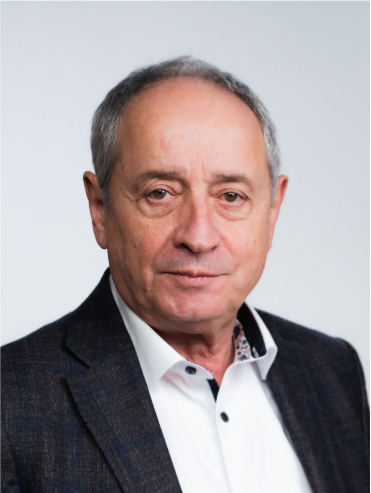 | Prof. Vladimir PoulkovTechnical University of Sofia, Bulgaria Bio: Professor Vladimir Poulkov(DSc) has received his M.Sc. and Ph.D. degrees from the Technical University of Sofia (TUS), Bulgaria. He has many years of teaching, research, and industrial experience in the field of Telecommunications. He has specialized in Germany (1993, 2001, 2002, 2003, 2004) and in Greece (1996) and is author of more than 200 scientific publications. He has led many national and international research, educational, industrial, and engineering projects working together with leading telecommunications operators, foreign academic institutions and industrial partners. Prof. Poulkov has been Dean of the Faculty of Telecommunications at TUS, Thematic Area Leader in "Resource-optimal and embedded ICT" at the "Center for Teleinfrastructure" (CTIF), Aalborg University, Denmark, Chairman of the "Bulgarian Cluster for Digital Transformation and Innovation, Vice Chairman of the "General Assembly" of the "European Telecommunications Standards Institute" (ETSI). Currently he is Head of the ‘‘Teleinfrastructure’’ R&D Laboratory at TU-Sofia, Head of the “Intelligent Communication Infrastructures” R&D Laboratory at Sofia Tech Park, Chairman of the Board of the “Research and Development and Innovation Consortium” at Sofia Tech Park - Bulgaria, Member of theAccreditation Council of the Bulgarian NationalEvaluation and Accreditation Agency. He is Visiting Professor within the School of Computing & Engineering at the University of Huddersfield, Fellow of the European Alliance for Innovation, Senior IEEE Member. Speech Title: Evolution of the Radio Access towards an Open AI-Native Network Abstract: The talk presents an overview of the evolution of the Radio Access Network (RAN) towards virtualized, open, and intelligent wireless access. It outlines the major transformations of the RAN architectures from hardware-centric systems to intelligent, autonomous, AI-native networks. The key drivers, open problems, and research challenges towards open AI-native 6G networks will also be considered. |
 | Dr. Yuchen WangZhejiang University of Science and Technology, China Bio: Dr. Yuchen Wang has published a number of academic papers, with research interests in multi-agent systems and machine learning. Dr. Yuchen Wang has led multiple industry-partnered projects, including new materials, industrial machinery, computing infrastructure, news media, and e-commerce, etc. Speech Title:"Parrot" or "Prophet"? – A Casual Discussion on LLM Capabilities Abstract:This talk examines how the capabilities of large language models are applied in practice. Starting from the technical lineage of the Transformer, it revisits the still-unresolved debate over whether these models genuinely understand, and turns to the concrete changes now visible in the tool stack, in the skills required, and in the way work is done. |